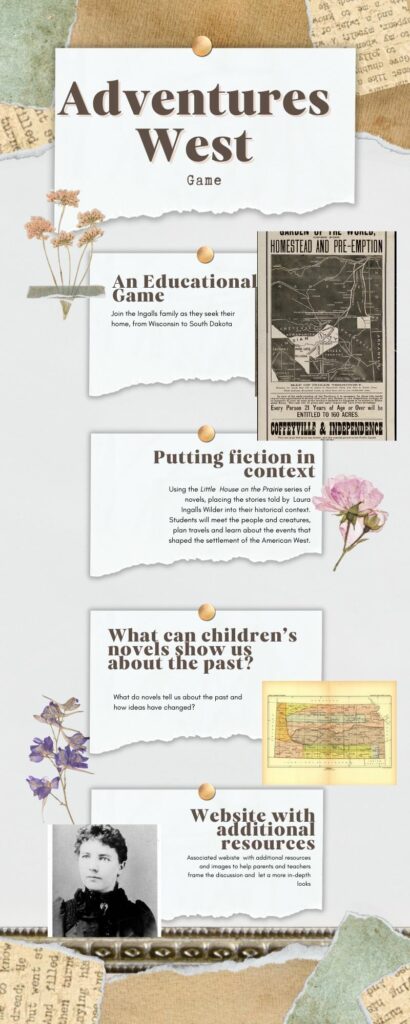
By bringing history into the digital world, educators can engage students in different ways than a textbook and introduce historical concepts and ideas without creating the educational equivalent of eating your vegetables. The digital world is rife with opportunities and challenges for history educators. Digital tools allow students to interact with history and historical thinking in a medium they are increasingly comfortable with and expect to use. Conversely, familiarity and high use of the internet can become a distraction and disseminate misinformation.
https://www.snopes.com/fact-check/theodore-roosevelt-triceratops
The digital world educators and students navigate both allows the imaginative big game prize for Roosevelt and the evaluation of the fake, based on the millennia apart dinosaurs and Roosevelt lived. He would probably have loved to hunt one though, and the faked photograph can also be used to look at Roosevelt as a sport hunter and a conservationist. It is a fanciful example, yet it illustrates the manipulation in the digital world and how to use that manipulation. Continuing with this photograph, here are more ways it can be used as an educational exercise:
- Review Wikipedia on “Triceratops.” Note when and where it lived. https://en.wikipedia.org/wiki/Triceratops
- Review Theodore Roosevelt in Wikipedia. https://en.wikipedia.org/wiki/Theodore_Roosevelt
- Compare another biography of Roosevelt to the Wikipedia page and look for similarities and differences.
- Using the Talk and View History buttons, study the origins and changes to the Wikipedia page. What information can they draw from who the editors are?
- Study the Theodore Roosevelt Hunting Library at the Library of Congress https://guides.loc.gov/theodore-roosevelt-hunting-library/about-the-collection
As educators, understanding the information and presentation of the information available to students creates a space for learning about how to evaluate information and sources. Instead of considering the digital world a place of potential disinformation, it can be used as a place to hone analytical skills and the habit of historical thinking.
Having said that, the digital world carries with it the risk of students learning “bad” history that is hard to dislodge in their developing brains. The ready availability of conspiracy theories and challenges to what history can be taught already bring challenges into the classroom; the digital world can amplify this. Education, and education on history, is difficult in light of the political and cultural wars being fought nationwide. But the digital world also brings the opportunity for educators to teach history and historical thinking in engaging ways.